Type of initiative

Best practice

We have

345

of 1000 actions

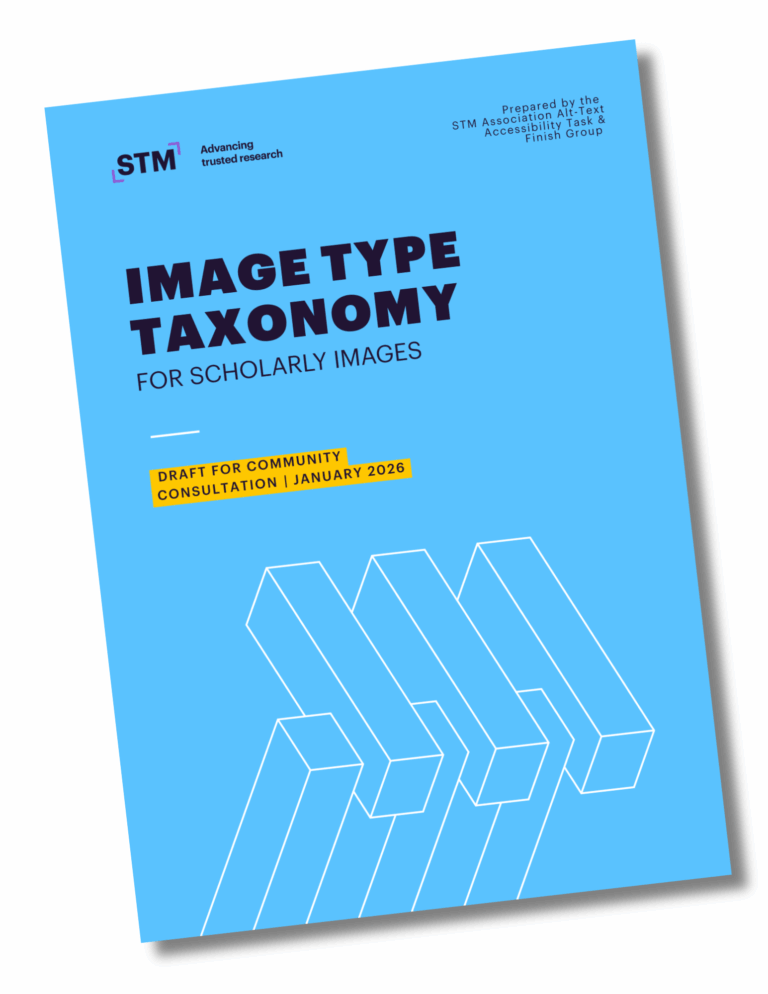
STM have released a draft taxonomy to support accessible publishing, with a focus on helping authors and publishers write better image descriptions (alt text). Not only does it help prepare for the upcoming ADA Title II update (coming into effect April 2026), it also supports our shared goal of making scholarly content more inclusive and available to all.

Relevant SDG’s
IPA SDG – Goal No 4 – Quality EducationIPA SDG – Goal No 10 – Reduced inequalities

Ebook technologies have reached a mature, stage, but digital production teams must coordinate diverse expertise to stay competitive while addressing accessibility, environmental impact, data protection, and interoperability. “The digital book quality reference list” – is a quality assurance framework created by and for the digital publishing industry, designed to support both day‑to‑day production and long‑term skills development across the publishing sector.

Relevant SDG’s

IPA SDG – Goal No 4 – Quality EducationIPA SDG – Goal No 17 – Partnerships for the Goals

These Top Action Tips are a guide for academic authors on how to write plain language summaries or bullets tailored to professionals and practitioners, to support and promote necessary connections for sustainable development.

Relevant SDG’s

IPA SDG – Goal No 4 – Quality EducationIPA SDG – Goal No 17 – Partnerships for the Goals

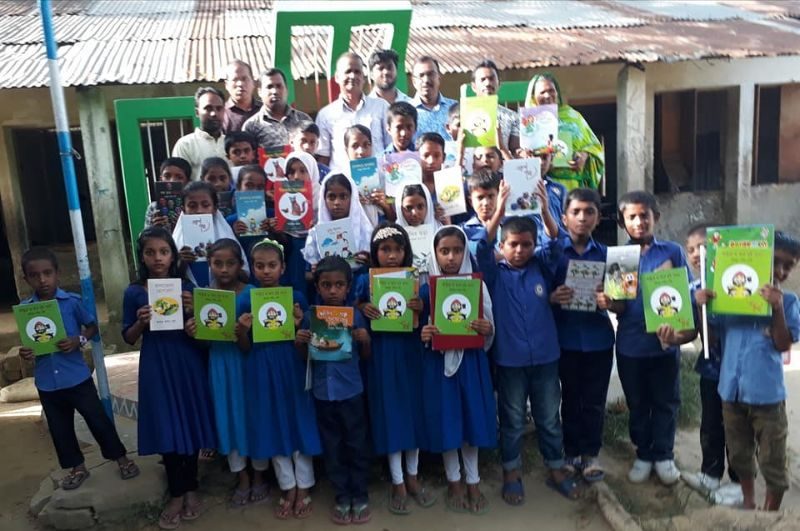
Annoy Prakash is regularly working to create reading societies in remote areas with the aim of developing a developed and conscious community. In this regard, our activities include distributing free books to school students by involving local libraries/schools (Our library is our regular partner.), organizing book reading competitions among students, and preparing ourselves to become educated and conscious citizens in the future.

Relevant SDG’s

IPA SDG – Goal No 4 – Quality Education

Since establishing its Environment & Sustainability (E&S) Committee in 2021, the European Association of Science Editors (EASE) has aligned its activities with key UN Sustainable Development Goals (SDGs). The poster “Greener Conferences: EASE-ing into Sustainability” outlines the Association’s practical measures for reducing environmental impact and enhancing equity at its events.

Relevant SDG’s

IPA SDG – Goal No 12 – Responsible consumption and productionIPA SDG – Goal No 13 – Climate action

Every digital article hosted, accessed, and cited online carries a measurable carbon cost. While the transition from print to digital has vastly improved global access to research, it has also introduced a new kind of environmental impact — one that often goes unseen. The STM Digital Carbon Calculator, built on DIMPACT methodology, enables publishers to measure the carbon emissions associated with their digital content and better understand their digital footprint.

Relevant SDG’s

IPA SDG – Goal No 12 – Responsible consumption and productionIPA SDG – Goal No 13 – Climate action

Community of Support – Integrating Sustainability into Higher Education and Society
Would you like to learn from others and gain access to additional resources and strategies? This community is brought to you in collaboration with the University World News. This group will help publishers, researchers, educators, policymakers and practitioners learn from each other to increase the success of their own efforts and get support. To be invited, go to https://forms.gle/w4mhaj2QR8RdZeVX6

Relevant SDG’s

IPA SDG – Goal No 4 – Quality EducationIPA SDG – Goal No 17 – Partnerships for the Goals

Achieving the SDGs requires collective effort and STM’s SDG Level 3 highlights how academic publishers can meaningfully advance all 17 goals by focusing on the targets that drive change. This level and resource articulates how academic publishers contribute to key SDGs and the 169 targets by exploring real-world case studies showcasing impactful actions from across the industry and highlighting earlier levels for valuable tips and resources.

Relevant SDG’s

IPA SDG – Goal No 4 – Quality EducationIPA SDG – Goal No 17 – Partnerships for the Goals

The Journal of Research in Educational Sciences is an editorial project by ASERS Publishing, established in 2010, which highlights the results and impact of using technology and innovation in education research. This initiative maps the alignment of the Journal with Sustainable Development Goals (SDGs) 3, 4, and 5, showcasing the journal’s contribution to research addressing key global challenges. The exercise was a collaborative effort between our researchers and the publishing team.

Relevant SDG’s

IPA SDG – Goal No 4 – Quality Education

The Journal of Environmental Management and Tourism, a collaborative editorial project of ASERS Publishing, aims to publish scientific articles of high academic quality that contribute to understanding sustainability and assessing broader societal impact through the lens of the SDGs for readers, collaborators, and editors alike. It is designed to share research findings and to stimulate new ideas and valuable insights regarding current best practices and future directions of SDGs 11 and 13.

Relevant SDG’s

IPA SDG – Goal No 11 – Sustainable Cities and CommunitiesIPA SDG – Goal No 13 – Climate action

Theoretical and Practical Research in Economic Fields, an initiative of ASERS Publishing, aims to challenge economists to address issues relevant to the current global situation and to publish articles that innovatively connect ideas from various branches of Economics. It serves as a forum for the dissemination of a variety of international issues, scientific research, and other matters of interest to academics from diverse fields related to economic sciences, and to promote SDG’s 8 and 9.

Relevant SDG’s

IPA SDG – Goal No 8 – Decent work and Economic GrowthIPA SDG – Goal No 9 – Industry, Innovation and Infrastructure

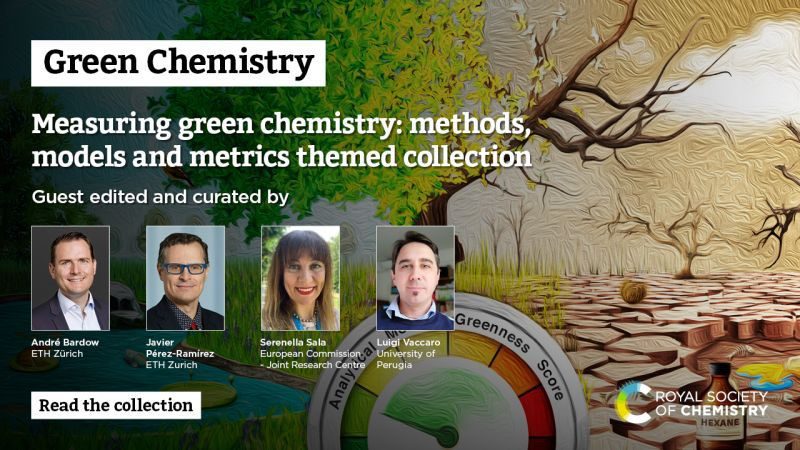
This cross-journal collection gathers scientific publications that focus on measuring advancements in sustainability. The work showcased provides insight into the benefits and trade-offs of different methods, models, and metrics, supporting readers and authors to measure, compare, and describe the advantages and disadvantages of introducing green chemistry principles and approaches in their work. The collection is intended as a guide and accessible resource for the whole chemistry community.

Relevant SDG’s

IPA SDG – Goal No 4 – Quality EducationIPA SDG – Goal No 12 – Responsible consumption and production

In this digital database, students and educators alike can freely access all material published under the More&More Fame English Practice brand. This includes material targeted at all students, beginning from age 4 to high school. Students and educators can freely access and use the digital versions of all our published works, complete with interactive activities, different printable exams, worksheets, and stories, practice and workbooks, picture and story books, animated videos, and much more.

Relevant SDG’s

IPA SDG – Goal No 4 – Quality EducationIPA SDG – Goal No 10 – Reduced inequalities

In support of Princeton University Press’ commitment to equitable and inclusive publishing, Supporting Diverse Voices grants offer historically underrepresented scholars around the globe the opportunity to develop a book proposal with one of the its partnering book coaches. Each grantee also has a PUP editor who works with both authors and coaches throughout the process. These grants ensure that this early stage support is available to the greatest diversity of prospective authors.

Relevant SDG’s

IPA SDG – Goal No 5 – Gender EqualityIPA SDG – Goal No 10 – Reduced inequalities

The new program has three parts. The first will be a carbon footprint calendar to be created in the form of a digital platform, allowing publishers to measure the carbon emissions of each work published. A life-cycle analysis is next, monitoring “the individual trajectory of two printed works and their digital environment, in an attempt to support decision-making and modes by which environmental performance can be improved. Finally training will be the third and final element.

Relevant SDG’s

IPA SDG – Goal No 12 – Responsible consumption and productionIPA SDG – Goal No 13 – Climate action

We host multidisciplinary, multimedia SDG related content on our SDG Programme page. This includes 17 SDG ‘hubs’, one for each goal, as well as highlights of SDG related events hosted by Springer Nature, blogposts and campaigns. We also feature the Nature Portfolio multi-journal SDG collection to make it easy for researchers and others to find and use the SDG research and information they need.

Relevant SDG’s

IPA SDG – Goal No 4 – Quality EducationIPA SDG – Goal No 17 – Partnerships for the Goals

This was an editorial that showed the results of using technology to map the alignment of the journal ‘Psicologia: Reflexão e Crítica’ (Psychology: Research and Review) with SDGs 3,4 and 5 to show the journal’s contribution to research addressing key SDGs. The exercise was a collaboration between the Content Innovation and publishing teams at Springer Nature.

Relevant SDG’s

IPA SDG – Goal No 3 – Good Health and well-beingIPA SDG – Goal No 5 – Gender Equality

We have established a partnership between Springer Nature, our SDG 5 working group and UN Women to promote dialog between researchers and policy makers. As part of the partnership, Springer Nature signed the UN Women Media Compact, hosted a UN Women representative in our NYC office for International Women’s Day, hosted panel discussion as part of our Breaking Barriers conference facilitated by UN Women and have been running further collaborative initiatives that bridge science and policy.

Relevant SDG’s

IPA SDG – Goal No 5 – Gender EqualityIPA SDG – Goal No 17 – Partnerships for the Goals