SDG tag: Development

We have

330

of 1000 actions

SDGenie (beta) is a new, prototype tool that explores how text, such as research abstracts, can be matched to specific targets set out in the Sustainable Development Goals (SDGs). SDGenie (beta) is free to use and offers researchers a new way to identify detailed targets – rather than goals alone – and, therefore, to make their work more relevant to the SDGs. There are 169 targets, which define actionable priorities. Together with indicators, they help to measure progress.

Relevant SDG’s
Zero hungerIPA SDG – Goal No 15 – Life on land

At Microbe 2025, a dedicated mini-symposium was held to discuss how microbiologists and microbes can further the SDGs. Expert panels held conversations about microbiology as a roadmap for progress, through the use of microbes to mitigate climate effects, generate renewable energy solutions, and advance the bioeconomy, and discussed the crucial role of education both as its own target and as a core part of achieving all of the goals.

Relevant SDG’s

IPA SDG – Goal No 4 – Quality EducationIPA SDG – Goal No 12 – Responsible consumption and production

In a Meeting Highlight, Richard Beckett et al. discuss top-ranked priority research questions resulting from the Probiotic Cities Working Group’s global interdisciplinary workshop, as well as their broader implications for microbiome science, urban health, and sustainable development. By focusing on these priorities, researchers, policymakers, and practitioners can foster a transformative agenda to integrate microbiomes into urban design, advancing resilient and equitable cities for the future.

Relevant SDG’s
IPA SDG – Goal No 11 – Sustainable Cities and Communities

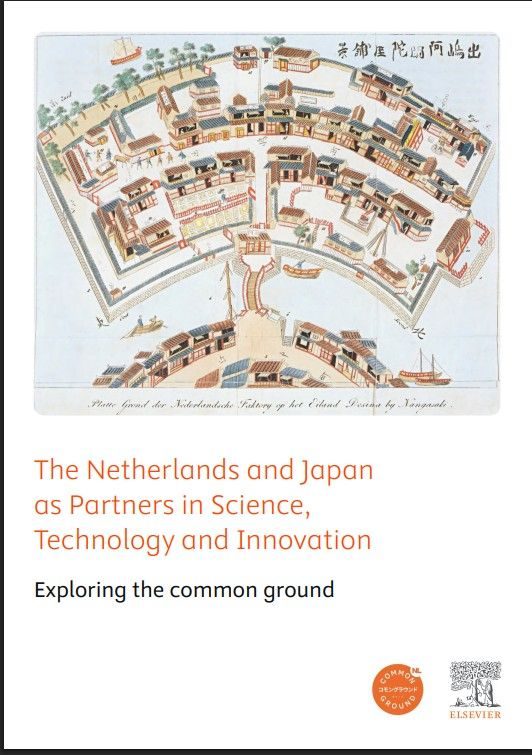
The Netherlands–Japan research partnership drives high-impact science and innovation, excelling in public-private collaboration and strategic technologies like quantum and photonics. By advancing health, industry, and innovation, it supports SDGs 3, 9, and 17, showing how international collaboration accelerates sustainable development and global knowledge sharing.

Relevant SDG’s

IPA SDG – Goal No 7 – ffordable and Clean EnergyIPA SDG – Goal No 9 – Industry, Innovation and Infrastructure

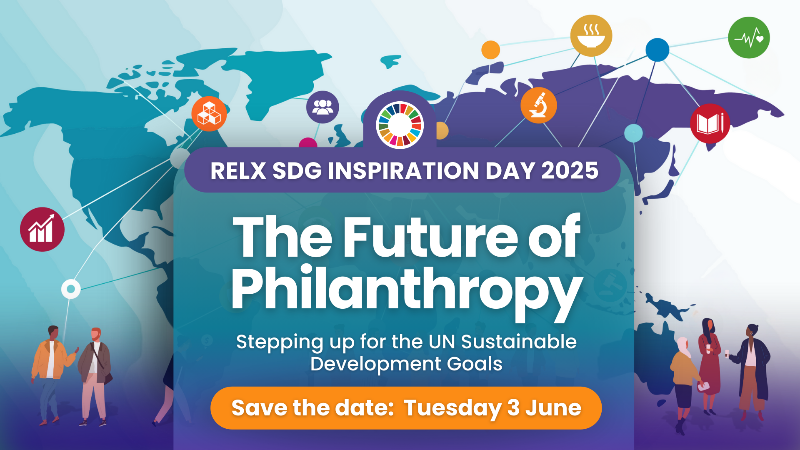
More than 800 guests from 75 countries came together virtually for RELX/Elsevier SDG Inspiration Day focused on The Future of Philanthropy: Stepping Up for the SDGs. Together, we explored how philanthropy can drive progress toward the SDGS through inspiring keynotes and thought provoking conversation from global changemakers including Ban Ki-moon, 8th Secretary-General of the UN; Sir Lenny Henry, actor, comedian, writer & philanthropist and Sarah, Duchess of York, author & humanitarian.

Relevant SDG’s

IPA SDG – Goal No 17 – Partnerships for the Goals

Achieving the SDGs requires collective effort and STM’s SDG Level 3 highlights how academic publishers can meaningfully advance all 17 goals by focusing on the targets that drive change. This level and resource articulates how academic publishers contribute to key SDGs and the 169 targets by exploring real-world case studies showcasing impactful actions from across the industry and highlighting earlier levels for valuable tips and resources.

Relevant SDG’s

IPA SDG – Goal No 4 – Quality EducationIPA SDG – Goal No 17 – Partnerships for the Goals

Global Social Challenges Journal responds directly to the SDGs, encompassing co-production and engaging with innovative and critical perspectives, including decolonial and southern epistemologies and their relationship with those of the Global North. By publishing Open Access evidence-based, collaborative work in the collective interest through a non-profit university press, the journal enables the sharing of knowledge needed to build a fairer world, across and for the Global South and North.

Relevant SDG’s

IPA SDG – Goal No 10 – Reduced inequalitiesIPA SDG – Goal No 17 – Partnerships for the Goals

The Journal of Research in Educational Sciences is an editorial project by ASERS Publishing, established in 2010, which highlights the results and impact of using technology and innovation in education research. This initiative maps the alignment of the Journal with Sustainable Development Goals (SDGs) 3, 4, and 5, showcasing the journal’s contribution to research addressing key global challenges. The exercise was a collaborative effort between our researchers and the publishing team.

Relevant SDG’s

IPA SDG – Goal No 4 – Quality Education

The Journal of Environmental Management and Tourism, a collaborative editorial project of ASERS Publishing, aims to publish scientific articles of high academic quality that contribute to understanding sustainability and assessing broader societal impact through the lens of the SDGs for readers, collaborators, and editors alike. It is designed to share research findings and to stimulate new ideas and valuable insights regarding current best practices and future directions of SDGs 11 and 13.

Relevant SDG’s

IPA SDG – Goal No 11 – Sustainable Cities and CommunitiesIPA SDG – Goal No 13 – Climate action

Theoretical and Practical Research in Economic Fields, an initiative of ASERS Publishing, aims to challenge economists to address issues relevant to the current global situation and to publish articles that innovatively connect ideas from various branches of Economics. It serves as a forum for the dissemination of a variety of international issues, scientific research, and other matters of interest to academics from diverse fields related to economic sciences, and to promote SDG’s 8 and 9.

Relevant SDG’s

IPA SDG – Goal No 8 – Decent work and Economic GrowthIPA SDG – Goal No 9 – Industry, Innovation and Infrastructure

In this digital database, students and educators alike can freely access all material published under the More&More Fame English Practice brand. This includes material targeted at all students, beginning from age 4 to high school. Students and educators can freely access and use the digital versions of all our published works, complete with interactive activities, different printable exams, worksheets, and stories, practice and workbooks, picture and story books, animated videos, and much more.

Relevant SDG’s

IPA SDG – Goal No 4 – Quality EducationIPA SDG – Goal No 10 – Reduced inequalities

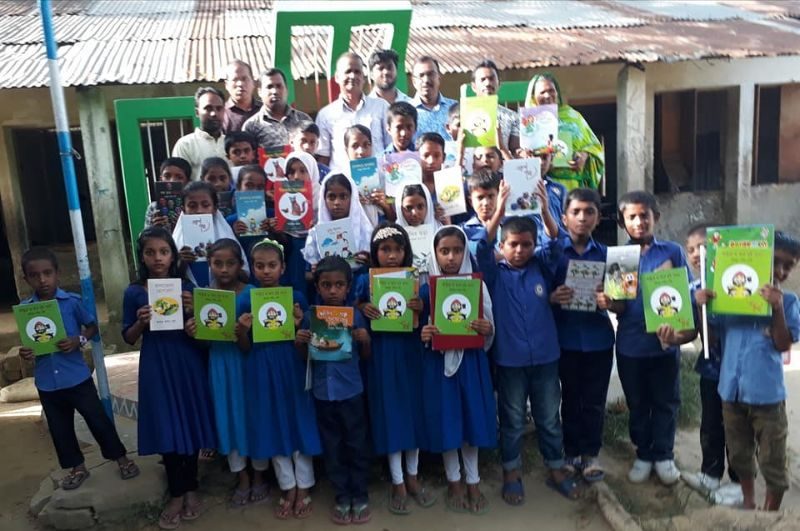
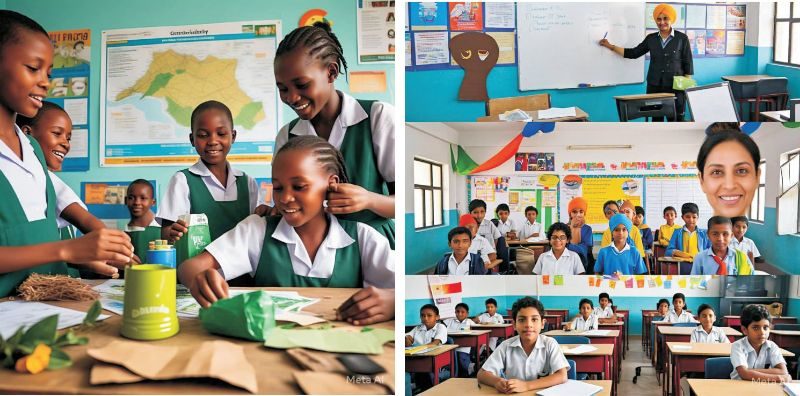
In 2024, the UN SDG Book Club Africa and the Nigeria Volunteers Network (NVN), joined forces with Mount Abu School, New Delhi, India. Promoting cultural exchange, the partners hosted the 17 Stories Competition Africa – India Edition 2024 and invited young writers from across Delhi, India, to showcase their creativity, empathy, and understanding of the UN SDGs. With entries judged by NVN and the Club in Nigeria, the fiction writing competition received an overwhelming response from students.

Relevant SDG’s

IPA SDG – Goal No 4 – Quality EducationIPA SDG – Goal No 17 – Partnerships for the Goals

The new program has three parts. The first will be a carbon footprint calendar to be created in the form of a digital platform, allowing publishers to measure the carbon emissions of each work published. A life-cycle analysis is next, monitoring “the individual trajectory of two printed works and their digital environment, in an attempt to support decision-making and modes by which environmental performance can be improved. Finally training will be the third and final element.

Relevant SDG’s

IPA SDG – Goal No 12 – Responsible consumption and productionIPA SDG – Goal No 13 – Climate action

The Springer Nature SDG Talk series is a forum for discussion of issues, progress and opportunities relating to research in support of the UN Sustainable Development Goals. The Talks provide space for exploration of research that could be used to implement solutions to global challenges, and for connecting this with audiences within and beyond academia.

Relevant SDG’s

IPA SDG – Goal No 4 – Quality EducationIPA SDG – Goal No 17 – Partnerships for the Goals

This was an editorial that showed the results of using technology to map the alignment of the journal ‘Psicologia: Reflexão e Crítica’ (Psychology: Research and Review) with SDGs 3,4 and 5 to show the journal’s contribution to research addressing key SDGs. The exercise was a collaboration between the Content Innovation and publishing teams at Springer Nature.

Relevant SDG’s

IPA SDG – Goal No 3 – Good Health and well-beingIPA SDG – Goal No 5 – Gender Equality

We have established a partnership between Springer Nature, our SDG 5 working group and UN Women to promote dialog between researchers and policy makers. As part of the partnership, Springer Nature signed the UN Women Media Compact, hosted a UN Women representative in our NYC office for International Women’s Day, hosted panel discussion as part of our Breaking Barriers conference facilitated by UN Women and have been running further collaborative initiatives that bridge science and policy.

Relevant SDG’s

IPA SDG – Goal No 5 – Gender EqualityIPA SDG – Goal No 17 – Partnerships for the Goals

The Sustainable Development in LA&C Summit brings together actors from diverse backgrounds involved with the SDGs. This event provides a platform to disseminate their work internationally and promotes synergies between our regional community aiming at advancing the 2030 agenda. Across the last three editions we were able to cover a multitude of subjects from ecosystem conservation to quality education, health and well being to sustainable cities, from climate change to just energy transition.

Relevant SDG’s

IPA SDG – Goal No 4 – Quality EducationIPA SDG – Goal No 7 – ffordable and Clean Energy

Although gender is one of the most important social and analytical categories used in public health research, there remains a gap in integrating gender related concepts in human health, animal health, the health of the environment and in the interdisciplinary One Health debate. One Health should be driven by inclusiveness and equity on all levels of society. In consequence, the One Health methodological definition should include feminist theories and gender concepts.

Relevant SDG’s

IPA SDG – Goal No 1 – No povertyIPA SDG – Goal No 5 – Gender Equality