SDG tag: Reducing Inequalities

We have

345

of 1000 actions

The IBC Children’s Choice Awards are an exciting shadowing scheme for our IBC Awards, where children act as judges, reading the shortlisted books and voting on their favourites. The scheme aims to engage children in fun reading activities that mirror the IBC Awards process. They have 5 weeks to read and judge the books.

Relevant SDG’s
IPA SDG – Goal No 4 – Quality EducationIPA SDG – Goal No 10 – Reduced inequalities

STM have released a draft taxonomy to support accessible publishing, with a focus on helping authors and publishers write better image descriptions (alt text). Not only does it help prepare for the upcoming ADA Title II update (coming into effect April 2026), it also supports our shared goal of making scholarly content more inclusive and available to all.

Relevant SDG’s

IPA SDG – Goal No 4 – Quality EducationIPA SDG – Goal No 10 – Reduced inequalities

Since 2024, the European Digital Reading Lab has begun reporting its actions in terms of contributions to the UN Sustainable Development Goals (SDGs), through its commitment to promoting open standards, enhancing accessibility, and developing the digital reading ecosystem.

Relevant SDG’s

IPA SDG – Goal No 9 – Industry, Innovation and InfrastructureIPA SDG – Goal No 17 – Partnerships for the Goals

The Women in Science Initiatives Hub highlights and supports the research of women scientists across disciplines, providing a global platform to showcase their work and connect with the research community. By running yearly activities that promote visibility, inclusion, and equal opportunities in STEM, the initiatives and the hub contribute to SDG 5 (Gender Equality) and SDG 10 (Reduced Inequalities), while inspiring future generations of women in science.

Relevant SDG’s

IPA SDG – Goal No 5 – Gender EqualityIPA SDG – Goal No 10 – Reduced inequalities

The Rising Star Hub supports young scientists, featuring ‘Conversations with Science’s Leading Minds’, inspirational interviews with established scientists and Nobel Laureates offering advice, mentorship, and real-world perspectives. It also highlights initiatives providing mentorship, hands-on opportunities, visibility, and open science practices, supporting SDG 4 (Quality Education) and SDG 10 (Reduced Inequalities), empowering young researchers to engage in the global research community.

Relevant SDG’s

IPA SDG – Goal No 4 – Quality EducationIPA SDG – Goal No 10 – Reduced inequalities

As a signatory of the UN SDG Publishers Compact, IntechOpen is committed to accelerating progress toward the SDGs by promoting open access research and by implementing sustainable practices across the organisation. The SDG Hub is a centralised space showcasing our sustainability efforts, including publishing programmes, responsible practices and processes, climate action, and organisational initiatives.
The hub contributes to SDG 4 (Quality Education) and promotes action across all 17 SDGs.

Relevant SDG’s

IPA SDG – Goal No 4 – Quality Education

These Top Action Tips are a guide for academic authors on how to write plain language summaries or bullets tailored to professionals and practitioners, to support and promote necessary connections for sustainable development.

Relevant SDG’s

IPA SDG – Goal No 4 – Quality EducationIPA SDG – Goal No 17 – Partnerships for the Goals

Since establishing its Environment & Sustainability (E&S) Committee in 2021, the European Association of Science Editors (EASE) has aligned its activities with key UN Sustainable Development Goals (SDGs). The poster “Greener Conferences: EASE-ing into Sustainability” outlines the Association’s practical measures for reducing environmental impact and enhancing equity at its events.

Relevant SDG’s

IPA SDG – Goal No 12 – Responsible consumption and productionIPA SDG – Goal No 13 – Climate action

The 18th EASE General Assembly and Conference “Editing in the age of misinformation” hybrid (in-person and online) conference was in Oslo on 14–16 May 2025 and featured dynamic content comprising sessions, pre-conference workshops, and speakers from around the world. This a format for future conferences, since it helped reduce travel-related emissions. Further, conference related activities involved planting 194 trees via the EASE Global Forest initiative instead of distributing delegate gifts,

Relevant SDG’s

IPA SDG – Goal No 12 – Responsible consumption and productionIPA SDG – Goal No 13 – Climate action

A new report from Springer Nature, in partnership with Overton, offers the most comprehensive picture yet of how academic research is influencing real-world policy tied to the SDGs. Published during COP30, the analysis is the first of its kind, drawing on more than 12 million policy documents. It finds that SDG policy documents seem to cite more research than non-SDG policy, signaling a connection between science and action on global challenges such as health, climate, and social development.

Relevant SDG’s

IPA SDG – Goal No 13 – Climate actionIPA SDG – Goal No 17 – Partnerships for the Goals

At Microbe 2025, a dedicated mini-symposium was held to discuss how microbiologists and microbes can further the SDGs. Expert panels held conversations about microbiology as a roadmap for progress, through the use of microbes to mitigate climate effects, generate renewable energy solutions, and advance the bioeconomy, and discussed the crucial role of education both as its own target and as a core part of achieving all of the goals.

Relevant SDG’s

IPA SDG – Goal No 4 – Quality EducationIPA SDG – Goal No 12 – Responsible consumption and production

To foster both quality education in college STEM classrooms with teaching assistants (TAs) as well as the career development and skills of TAs themselves, JMBE held a special call for papers on TA professional development, organized by senior editor Jeffrey Olimpo. The resulting article collection covers a variety of topics like TA program development, assessments, and mentoring, relevant in numerous educational communities and contexts globally, to ensure graduates have the knowledge they need.

Relevant SDG’s

IPA SDG – Goal No 4 – Quality Education

mSystems provided waiver codes to promising early-career researchers who presented at the Center for Microbiome Innovation International Microbiome Meeting, EcoFAB 2025, and Microbial Dark Matter Symposium, allowing them to publish in any ASM journal, regardless of their ability to pay publication charges.

Relevant SDG’s

IPA SDG – Goal No 10 – Reduced inequalities

American Society for Microbiology, with Kriyadocs, has enhanced its published content to serve a diverse global audience by incorporating alternate text (alt-text) for figures and implementing new table and figure standards for an accessible, inclusive reader experience.

Relevant SDG’s

IPA SDG – Goal No 10 – Reduced inequalities

APACE (Accelerating Publishing Accessibility through Collaboration in Europe) is a network promoting inclusion for 100M+ print-impaired people in Europe by connecting publishers and accessibility organizations. It builds industry capacity via training, a Summer School, networking, awareness events, and pilot projects, aligned with the EU Accessibility Act. Results (guidelines, best practices, whitepapers) will be shared through the European Accessibility Directory.

Relevant SDG’s

IPA SDG – Goal No 4 – Quality EducationIPA SDG – Goal No 10 – Reduced inequalities

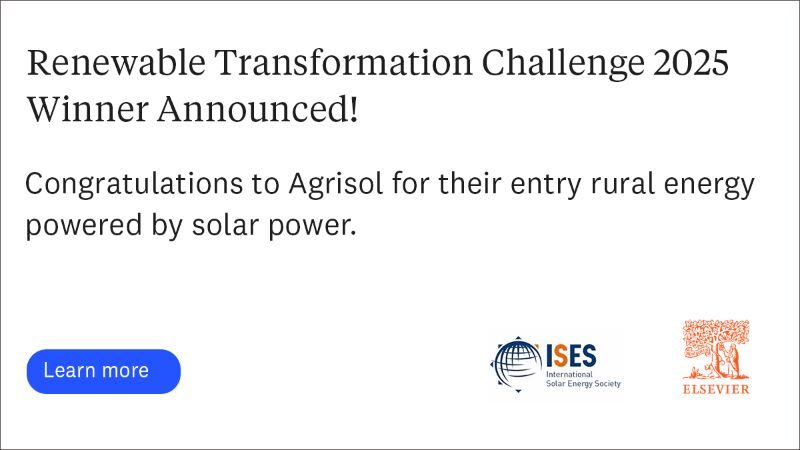
The Renewable Transformation Challenge, launched in 2017, aims to honor and showcase outstanding work that actively supports the transformation to a world powered by renewable energy and has potential to widen access to energy, particularly in developing countries. Over 152 entries were received which were scored in terms of applicability, impact, sustainability and scalability with the winner of the €20,000 prize awarded to Agrisol, enabling rural agriculture powered by solar energy.

Relevant SDG’s

IPA SDG – Goal No 7 – ffordable and Clean EnergyIPA SDG – Goal No 13 – Climate action

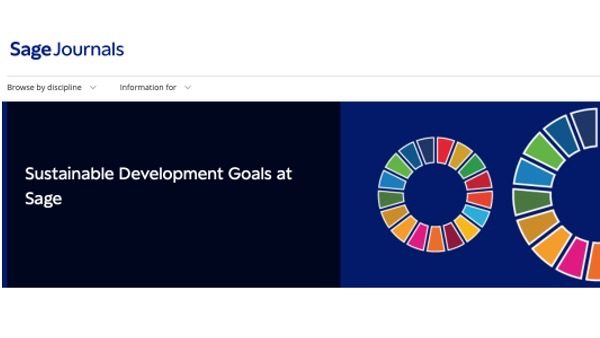
These microsites serve as a jumping off point for SDG resources to identify key information, data, authors, and journals publishing on these topics. The microsites include a range of journal articles, special collections, books, business cases, and podcasts that reflect Sage’s dedication to making an impact both inside and outside of academia.

Relevant SDG’s

IPA SDG – Goal No 1 – No povertyIPA SDG – Goal No 13 – Climate action

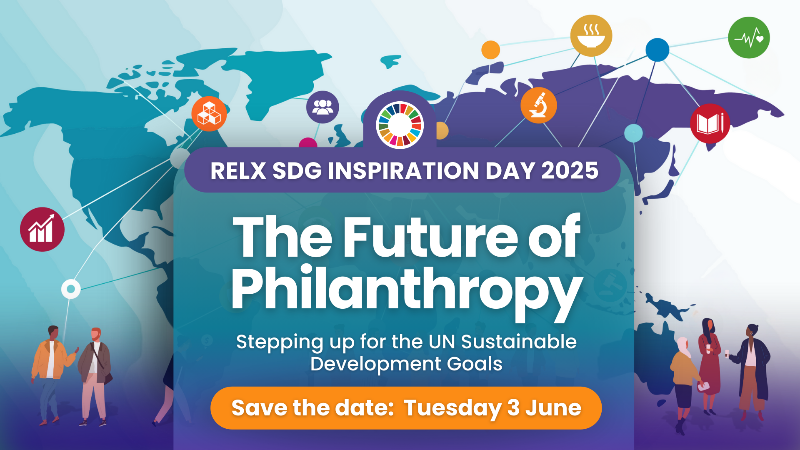
More than 800 guests from 75 countries came together virtually for RELX/Elsevier SDG Inspiration Day focused on The Future of Philanthropy: Stepping Up for the SDGs. Together, we explored how philanthropy can drive progress toward the SDGS through inspiring keynotes and thought provoking conversation from global changemakers including Ban Ki-moon, 8th Secretary-General of the UN; Sir Lenny Henry, actor, comedian, writer & philanthropist and Sarah, Duchess of York, author & humanitarian.

Relevant SDG’s

IPA SDG – Goal No 17 – Partnerships for the Goals