SDG tag: Education

We have

330

of 1000 actions

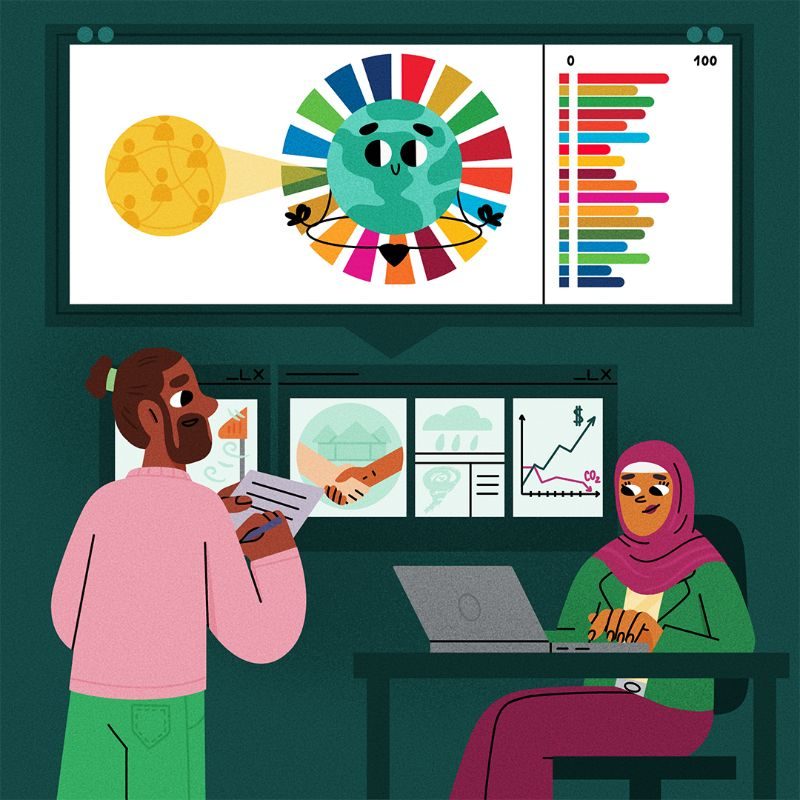
A new report from Springer Nature, in partnership with Overton, offers the most comprehensive picture yet of how academic research is influencing real-world policy tied to the SDGs. Published during COP30, the analysis is the first of its kind, drawing on more than 12 million policy documents. It finds that SDG policy documents seem to cite more research than non-SDG policy, signaling a connection between science and action on global challenges such as health, climate, and social development.

Relevant SDG’s

IPA SDG – Goal No 13 – Climate actionIPA SDG – Goal No 17 – Partnerships for the Goals

SDGenie (beta) is a new, prototype tool that explores how text, such as research abstracts, can be matched to specific targets set out in the Sustainable Development Goals (SDGs). SDGenie (beta) is free to use and offers researchers a new way to identify detailed targets – rather than goals alone – and, therefore, to make their work more relevant to the SDGs. There are 169 targets, which define actionable priorities. Together with indicators, they help to measure progress.

Relevant SDG’s

Zero hungerIPA SDG – Goal No 15 – Life on land

At Microbe 2025, a dedicated mini-symposium was held to discuss how microbiologists and microbes can further the SDGs. Expert panels held conversations about microbiology as a roadmap for progress, through the use of microbes to mitigate climate effects, generate renewable energy solutions, and advance the bioeconomy, and discussed the crucial role of education both as its own target and as a core part of achieving all of the goals.

Relevant SDG’s

IPA SDG – Goal No 4 – Quality EducationIPA SDG – Goal No 12 – Responsible consumption and production

To foster both quality education in college STEM classrooms with teaching assistants (TAs) as well as the career development and skills of TAs themselves, JMBE held a special call for papers on TA professional development, organized by senior editor Jeffrey Olimpo. The resulting article collection covers a variety of topics like TA program development, assessments, and mentoring, relevant in numerous educational communities and contexts globally, to ensure graduates have the knowledge they need.

Relevant SDG’s

IPA SDG – Goal No 4 – Quality Education

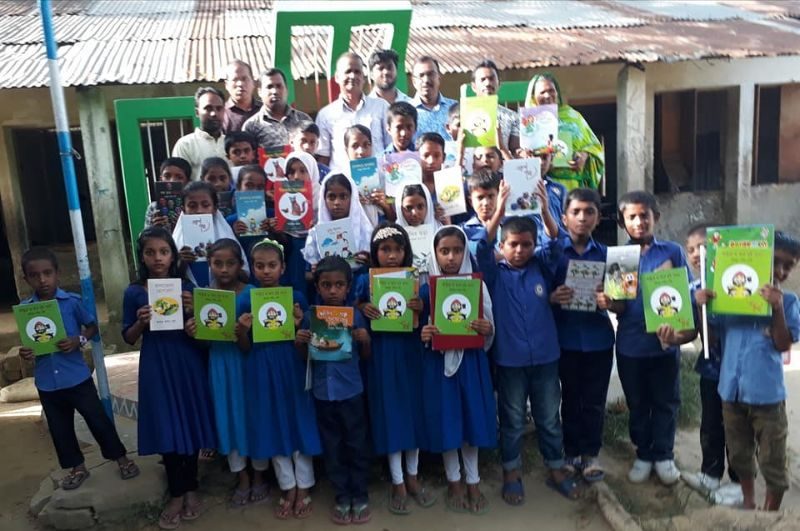
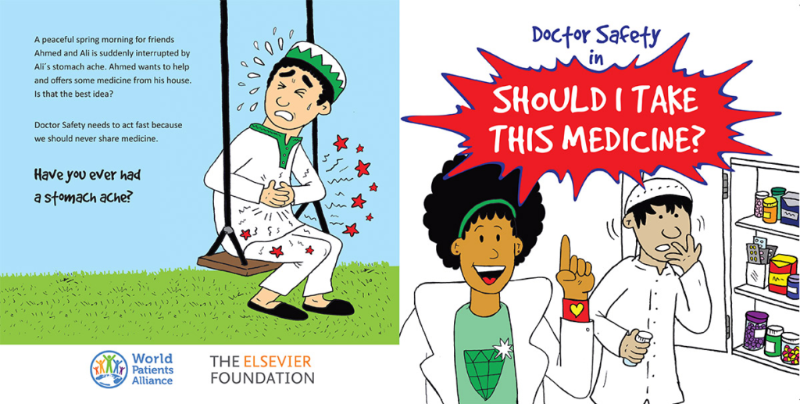
The Elsevier Foundation, in partnership with Elsevier and the World Patients Alliance (WPA), has launched a children’s book initiative aimed at embedding patient safety awareness from a young age. Recognizing that unsafe care contributes to millions of deaths and adverse outcomes globally—especially in low- and middle-income countries—this project produces freely accessible, multilingual books (print, audio, video) for children aged 6–12.

Relevant SDG’s

IPA SDG – Goal No 3 – Good Health and well-beingIPA SDG – Goal No 4 – Quality Education

Frontiers for Young Minds provides top-quality, free science to educate young people and engage them to protect tomorrow’s world. All articles are reviewed and edited by kids aged 8-15 to be fun to read for their peers.
This second volume showcases winners of the Frontiers Planet Prize 2024, working towards solutions to prevent us from crossing the nine planetary boundaries, for a healthy future on a healthy planet. From biodiversity drivers to freshwater conservation, let them motivate you!

Relevant SDG’s

IPA SDG – Goal No 4 – Quality EducationIPA SDG – Goal No 13 – Climate action

Frontiers for Young Minds provides top-quality, free science to educate young people and engage them to protect tomorrow’s world. All articles are reviewed and edited by kids aged 8-15 to be fun to read for their peers.
In this first volume of the Frontiers Planet Prize, we showcase the winning international research towards solutions to prevent our planet from crossing the nine planetary boundaries, and help to save our ecosystem – from forest regrowth to human dietary changes, get inspired!

Relevant SDG’s

IPA SDG – Goal No 4 – Quality EducationIPA SDG – Goal No 13 – Climate action

Frontiers for Young Minds provides top-quality, free science to educate young people and engage them to protect tomorrow’s world. All articles are reviewed and edited by kids aged 8-15 to be fun to read for their peers.

In this second-volume Collection by IPCC researchers, explore the latest predictions and recommendations from the last IPCC Report on: how and why our climate is changing, how climate change is impacting our world and people everywhere, and what we can do to help stop it.

Relevant SDG’s

IPA SDG – Goal No 4 – Quality EducationIPA SDG – Goal No 13 – Climate action

These microsites serve as a jumping off point for SDG resources to identify key information, data, authors, and journals publishing on these topics. The microsites include a range of journal articles, special collections, books, business cases, and podcasts that reflect Sage’s dedication to making an impact both inside and outside of academia.

Relevant SDG’s

IPA SDG – Goal No 1 – No povertyIPA SDG – Goal No 13 – Climate action

Community of Support – Integrating Sustainability into Higher Education and Society
Would you like to learn from others and gain access to additional resources and strategies? This community is brought to you in collaboration with the University World News. This group will help publishers, researchers, educators, policymakers and practitioners learn from each other to increase the success of their own efforts and get support. To be invited, go to https://forms.gle/w4mhaj2QR8RdZeVX6

Relevant SDG’s

IPA SDG – Goal No 4 – Quality EducationIPA SDG – Goal No 17 – Partnerships for the Goals

Achieving the SDGs requires collective effort and STM’s SDG Level 3 highlights how academic publishers can meaningfully advance all 17 goals by focusing on the targets that drive change. This level and resource articulates how academic publishers contribute to key SDGs and the 169 targets by exploring real-world case studies showcasing impactful actions from across the industry and highlighting earlier levels for valuable tips and resources.

Relevant SDG’s

IPA SDG – Goal No 4 – Quality EducationIPA SDG – Goal No 17 – Partnerships for the Goals

Global Social Challenges Journal responds directly to the SDGs, encompassing co-production and engaging with innovative and critical perspectives, including decolonial and southern epistemologies and their relationship with those of the Global North. By publishing Open Access evidence-based, collaborative work in the collective interest through a non-profit university press, the journal enables the sharing of knowledge needed to build a fairer world, across and for the Global South and North.

Relevant SDG’s

IPA SDG – Goal No 10 – Reduced inequalitiesIPA SDG – Goal No 17 – Partnerships for the Goals

Bristol University Press (BUP), the mission-driven, not-for-profit academic publisher, released its Impact Report, showcasing the Press’s role in advancing global knowledge and public policy around the United Nations Sustainable Development Goals (SDGs). The report highlights a year of transformative publishing, widespread open access engagement and growing international influence.

Relevant SDG’s

IPA SDG – Goal No 10 – Reduced inequalitiesIPA SDG – Goal No 16 – Peace, justice and strong institutions

The Journal of Research in Educational Sciences is an editorial project by ASERS Publishing, established in 2010, which highlights the results and impact of using technology and innovation in education research. This initiative maps the alignment of the Journal with Sustainable Development Goals (SDGs) 3, 4, and 5, showcasing the journal’s contribution to research addressing key global challenges. The exercise was a collaborative effort between our researchers and the publishing team.

Relevant SDG’s

IPA SDG – Goal No 4 – Quality Education

The Journal of Environmental Management and Tourism, a collaborative editorial project of ASERS Publishing, aims to publish scientific articles of high academic quality that contribute to understanding sustainability and assessing broader societal impact through the lens of the SDGs for readers, collaborators, and editors alike. It is designed to share research findings and to stimulate new ideas and valuable insights regarding current best practices and future directions of SDGs 11 and 13.

Relevant SDG’s

IPA SDG – Goal No 11 – Sustainable Cities and CommunitiesIPA SDG – Goal No 13 – Climate action

Theoretical and Practical Research in Economic Fields, an initiative of ASERS Publishing, aims to challenge economists to address issues relevant to the current global situation and to publish articles that innovatively connect ideas from various branches of Economics. It serves as a forum for the dissemination of a variety of international issues, scientific research, and other matters of interest to academics from diverse fields related to economic sciences, and to promote SDG’s 8 and 9.

Relevant SDG’s

IPA SDG – Goal No 8 – Decent work and Economic GrowthIPA SDG – Goal No 9 – Industry, Innovation and Infrastructure

The Sustainable Story Award celebrates authors across fiction, non-fiction, and children’s literature who engage with urgent environmental and social themes. By empowering authors who bring these critical topics to life, we aim to inspire change, spark dialogue, and make sustainability a central focus in contemporary literature. A total award fund of £25,000 (US$33,170) is expected to supply £15,000 for the winner of the award and £5,000 for each of two runners-up.

Relevant SDG’s

IPA SDG – Goal No 13 – Climate actionIPA SDG – Goal No 15 – Life on land

In this digital database, students and educators alike can freely access all material published under the More&More Fame English Practice brand. This includes material targeted at all students, beginning from age 4 to high school. Students and educators can freely access and use the digital versions of all our published works, complete with interactive activities, different printable exams, worksheets, and stories, practice and workbooks, picture and story books, animated videos, and much more.

Relevant SDG’s

IPA SDG – Goal No 4 – Quality EducationIPA SDG – Goal No 10 – Reduced inequalities